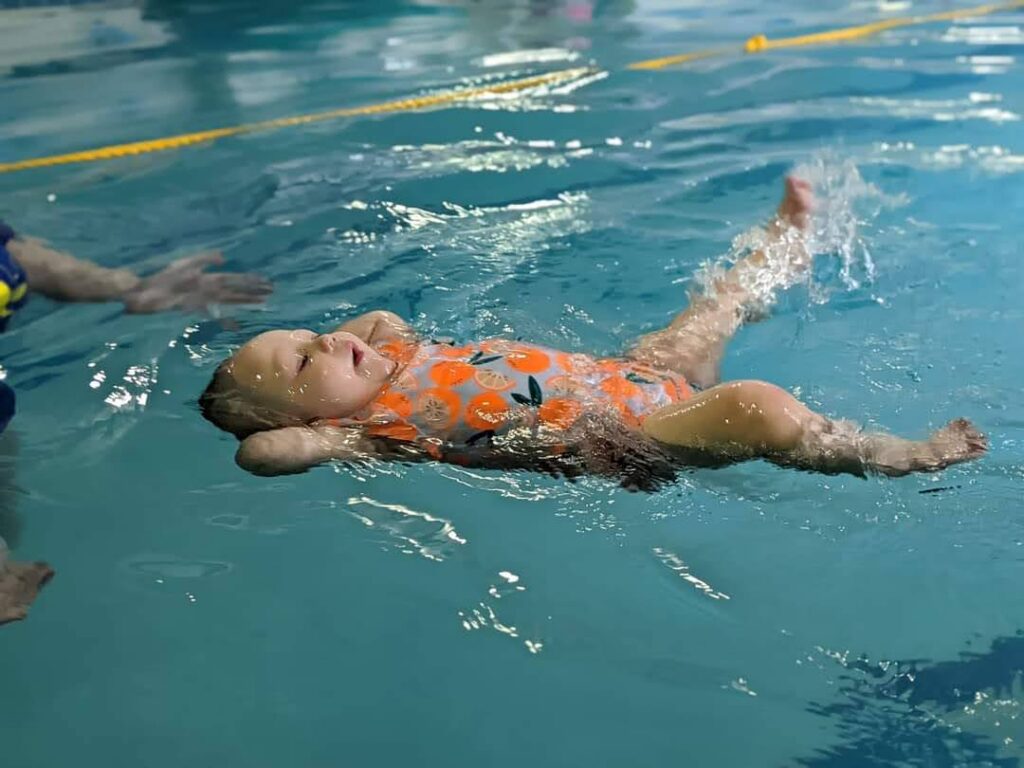
Infant Survival Swim (ISS) is a water safety approach that teaches infants and young children how to independently survive and self-rescue in the water.
Rather than focusing first on swim strokes or recreational skills, ISS prioritizes:
Breath control
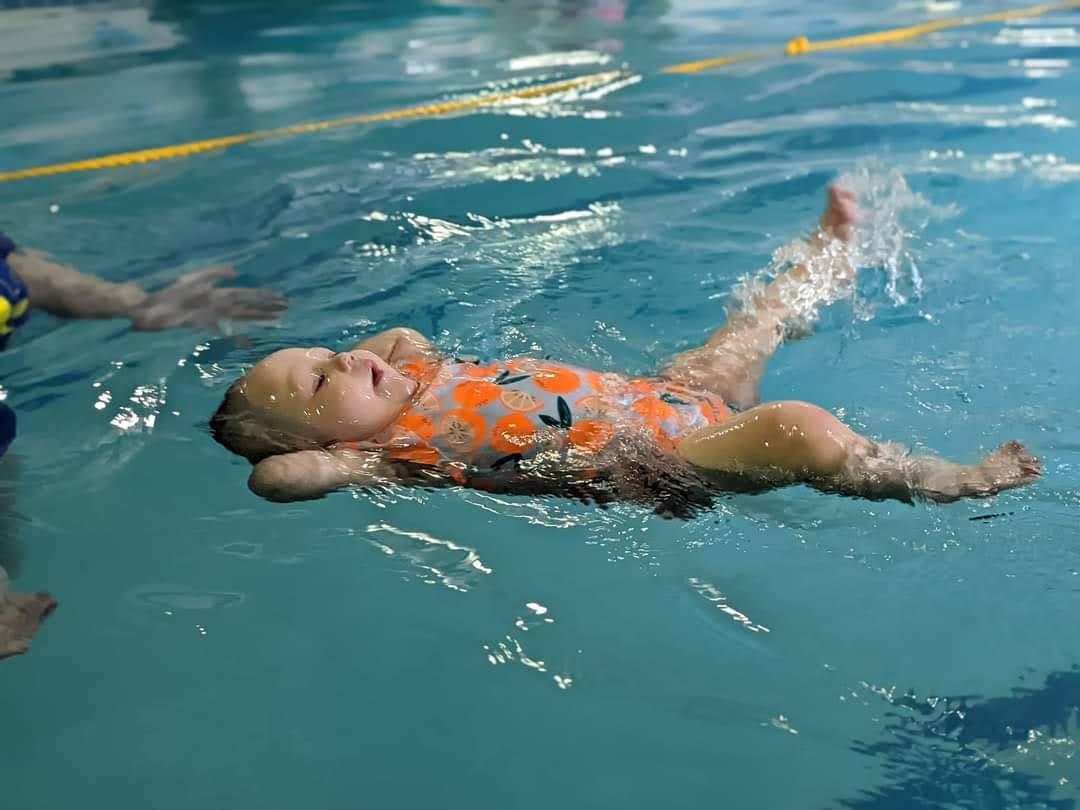
Back floating
Swim-float-swim sequencing
Self-regulation
Reaching an exit safely
At Little Fins Swim School in Colorado Springs, we use survival-based swim instruction to build real water safety, not just pool comfort.
Is ISS the Same as ISR?
This is one of the most common questions parents ask.
ISR (Infant Swimming Resource) is a nationally recognized brand that provides instructor training in survival floating techniques.
Infant Survival Swim (ISS) is a broader educational category that includes survival-based swim instruction methods — including swim-float-swim sequencing and independent self-rescue.
Many parents use the term “ISR” when searching for survival swim lessons because the brand is widely known. However, what families are typically looking for is survival-based instruction that teaches children how to:
Roll onto their back to float
Control their breathing
Swim toward safety
Exit the water independently
At Little Fins, our focus is not on branding. It is on outcomes:
Safe, confident, self-rescuing swimmers.
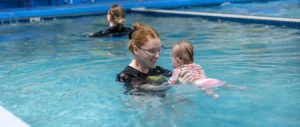
Ready to learn more about Infant Survival Swim lessons at Little Fins? View our Infant Survival program
What Is Swim-Float-Swim?
Swim-Float-Swim is a self-rescue sequence that teaches children to alternate between swimming and floating in order to reach safety.
The process looks like this:
Swim forward using kicking and paddling
Roll onto the back to float and breathe
Roll back over to continue swimming
Children can begin learning foundational survival skills as early as six months old, depending on readiness.
This method helps children:
Conserve energy
Avoid panic
Manage fatigue
Stay calm in unexpected water entry
Reach an exit independently
The goal is not just floating.
The goal is controlled movement with purpose.
Why Survival Skills Matter More Than Early Stroke Development
Traditional swim lessons often begin with stroke mechanics.
Survival swim lessons begin with safety.
Before children learn freestyle or backstroke, they must first master:
Independent floating
Breath regulation
Body positioning
Directional movement
Self-rescue sequences
These foundational skills make future stroke development faster, safer, and more confident.
Safety is not separate from swimming.
It is the foundation of swimming.
Where Do Most Childhood Drownings Occur?
Many parents assume drowning only happens in large bodies of water.
However, national data shows that drowning incidents frequently occur in:
Backyard pools
Community pools
Bathtubs
Lakes and ponds
Because survival swim focuses on body control and breath regulation rather than depth, the skills apply in any water environment.
A child who can float, regulate breath, and roll independently has a critical layer of protection.
According to the CDC, drowning is one of the leading causes of unintentional death for children ages 1–4. CDC drowning statistics
At What Age Should a Child Start Infant Survival Swim?
Early exposure to water builds comfort.
Structured survival instruction builds safety.
General guidance:
0–6 months: Parent-participation water introduction classes
6 months–4 years: Ideal window for structured survival swim instruction
4+ years: Survival skills and stroke refinement
Survival swim is not just for babies. These principles apply at any age, even adults learning later in life.
The American Academy of Pediatrics recommends formal swim instruction as part of a layered drowning prevention strategy. American Academy of Pediatrics water safety guidance.
Water safety has no age limit.
How to Choose the Right Survival Swim Program
When looking for survival swim lessons in Colorado Springs, parents should look for:
One-on-one instruction
Structured skill progression
Emotional regulation support
Instructor experience and certification
A focus on self-rescue, not just recreation
Infant Survival Swim is about equipping children with skills that could one day save their life.
And that should never be delayed.
Little Fins was built around exactly these principles. Explore our Infant Survival Swim Lessons in Colorado Springs
Final Thoughts
Whether parents search for “ISR lessons” or “Infant Survival Swim,” what they truly want is peace of mind.
At Little Fins Swim School, our mission is simple:
Teach children how to survive first.
Help them thrive second.
Because confidence in the water begins with safety.
About the Author
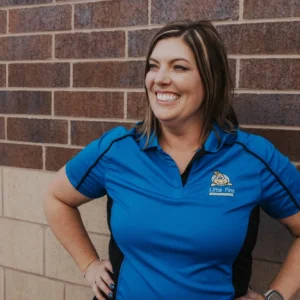 Lauri (Thomas) Armstrong is the founder and owner of Little Fins Swim School in Colorado Springs, Colorado. As a leader in Infant Survival Swim (ISS) education and drowning prevention advocacy, Lauri has helped thousands of families build life-saving water skills through early, research-informed instruction.
Under her leadership, Little Fins has become one of Colorado Springs’ premier destinations for one-on-one swim lessons, offering parent-and-me water introduction beginning at 2 months and structured safety and survival training starting at 6 months.
Lauri is passionate about replacing fear with confidence and believes water safety should begin before a child can walk — not after a close call. Her mission is simple: equip children with skills that could one day save their life.
Safety first. Skills for life. Awareness for the world.
➡️ Read more about Infant Survival Swim
➡️ Learn about our Colorado Springs swim lessons
➡️ Schedule a trial lesson